
The Myth of Narcissus Is Older Than Selfies, And Way More Dangerous

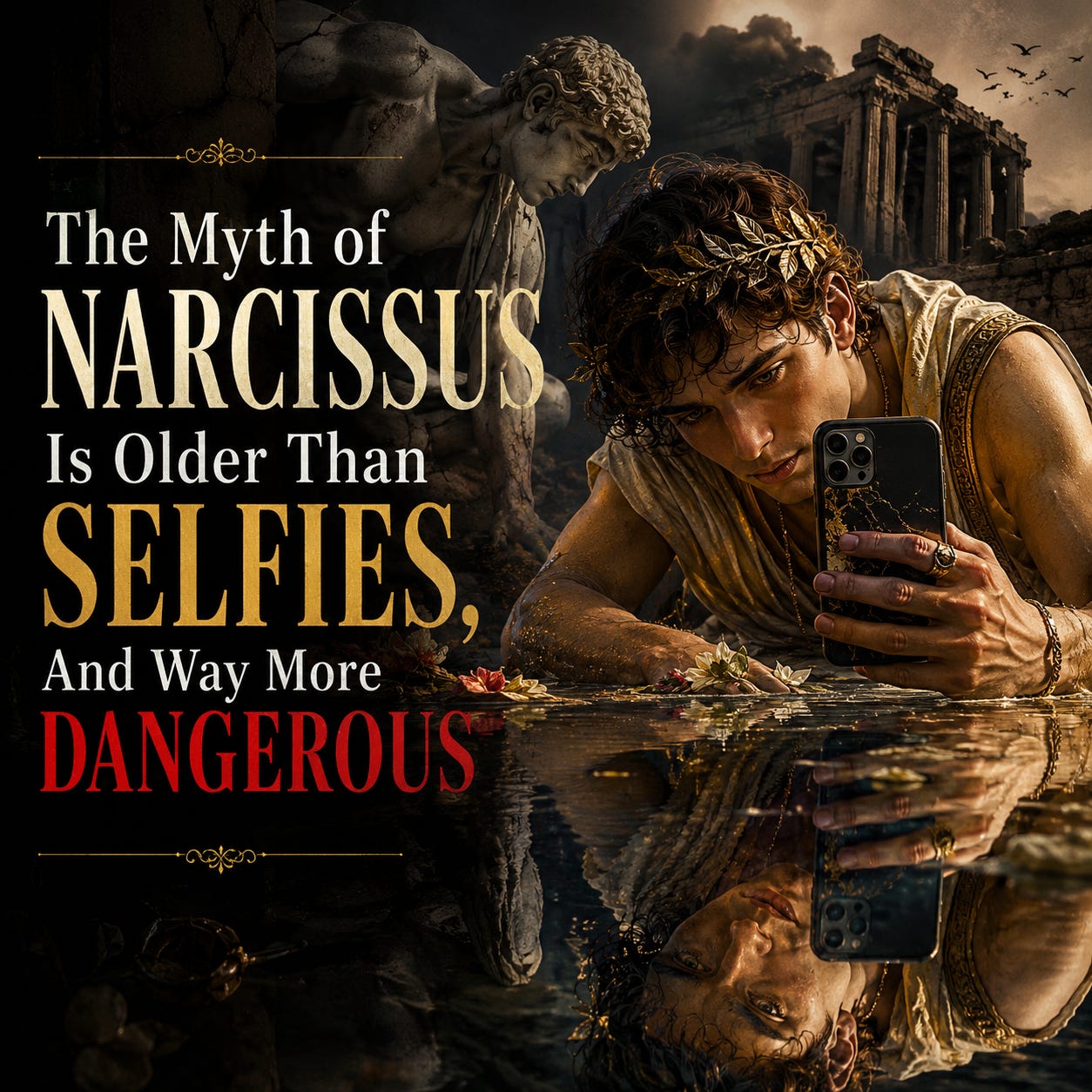
Long before mirrors, filters, and front cameras…
The Greeks already knew this story.
Narcissus was beautiful. Restless. Searching for someone to love.
After rejecting a nymph named Echo, he saw his own reflection in a river, and fell in love with it.
He couldn’t look away.
He drowned.
A flower grew where he died. We still call it the Narcissus.
That myth isn’t just poetic.
It’s a warning about elevated, sometimes destructive self-involvement, what psychologists now study as narcissism.
And no, it’s not just “a toxic ex” or an advice-column buzzword.
It’s a real set of traits. With a dark side. And a way out.
What narcissism actually is
Psychologically, narcissism is an inflated, grandiose self-image.
To varying degrees, narcissists believe they’re better looking, smarter, more important, and that they deserve special treatment.
Psychologists study two main trait forms:
1. Grandiose narcissism