

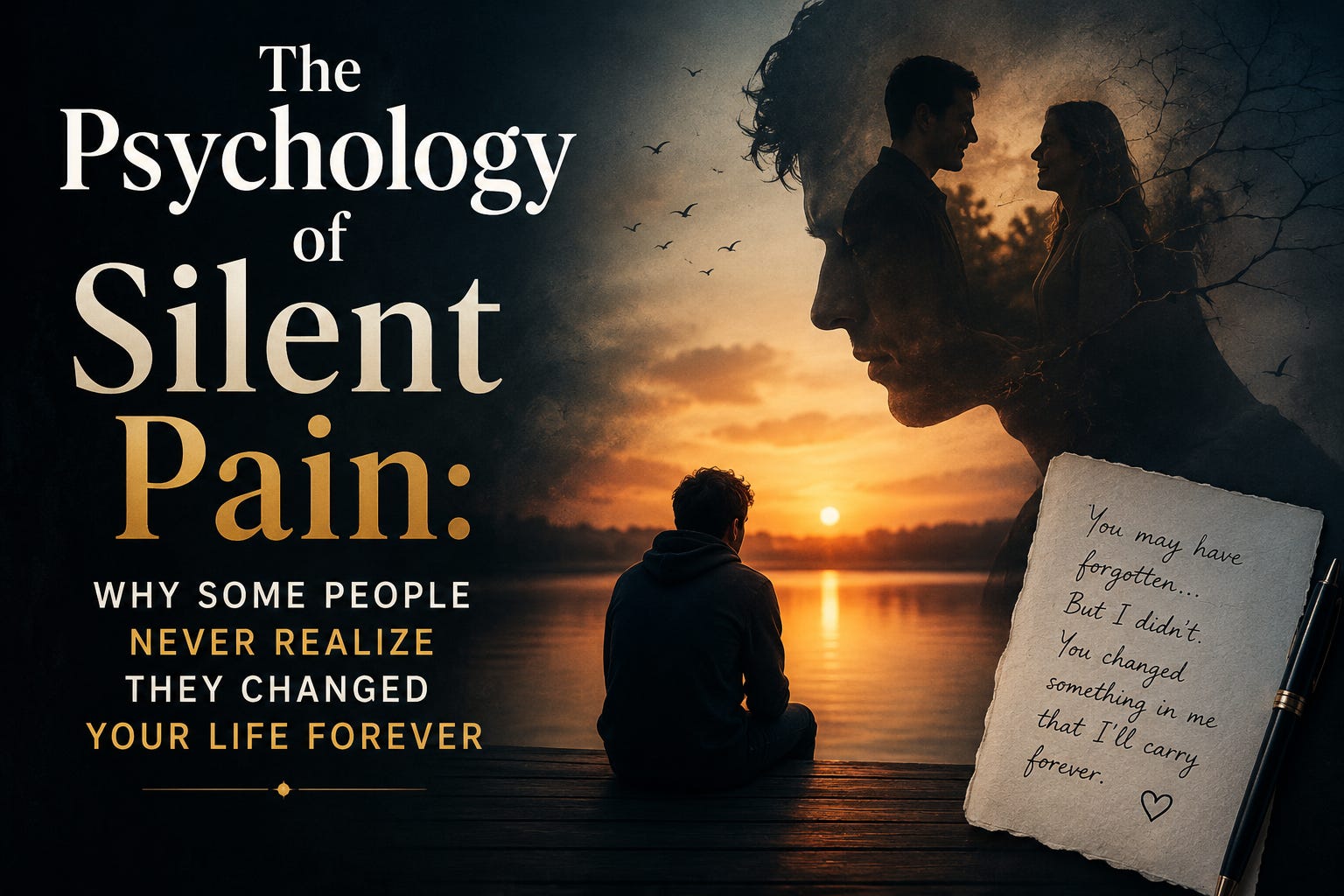
There is a kind of pain that doesn’t come from losing someone to death or from a dramatic breakup. It comes from something much quieter, watching someone slowly disappear from your life while they seem completely unaffected.
Most of us have experienced it.
A close friend stops calling. A person who once knew everything about you becomes a stranger. Someone you trusted changes, moves on, or simply forgets about you. Meanwhile, you’re left wondering what happened and whether you could have done something differently.
Psychology offers an interesting explanation for this.
We Don’t Experience the Same Moments the Same Way
One conversation can change your life forever, while the other person barely remembers it.
This happens because our brains attach different emotional value to different experiences. If you were deeply invested in the relationship, your brain stored those memories more strongly. For the other person, the same moment may have been just another ordinary day.
That’s why you sometimes hear people say, “I don’t even remember saying that,” even though those words stayed with you for years.
The Pain of Never Getting Closure
Many people believe healing comes after an apology or a clear ending.
In reality, life rarely works that way.
Some friendships fade without an explanation. Some relationships end with unanswered messages instead of honest conversations. Sometimes people simply leave, and you’re left creating your own ending because they never gave you one.
Psychologists often describe this as the stress of unresolved experiences. Our minds naturally search for answers, and when we don’t find them, we keep replaying old memories, hoping they’ll suddenly make sense.
Why It’s So Hard to Let Go
Our brains are designed to hold on to emotionally meaningful experiences.
That’s why you can remember a conversation from five years ago, a place you visited together, or even the exact song that was playing during an important moment.
It’s not because you’re weak.
It’s because emotions strengthen memories.
The stronger the emotional connection, the harder it becomes to let go.
The Question We Often Ask Ourselves
After someone leaves, many people ask,
“Why wasn’t I enough?”
But psychology suggests this may be the wrong question.
People leave relationships for many reasons, timing, personal struggles, different priorities, emotional immaturity, or simply growing in different directions. Their decision doesn’t automatically define your value.
A person’s inability to stay is not proof that you were unworthy of love or friendship.
Healing Doesn’t Mean Forgetting
One of the biggest myths about healing is that you’ll eventually forget the people who hurt you.
You probably won’t.
Instead, you’ll remember them differently.
The memories won’t disappear, but they’ll stop controlling your emotions. You’ll think about the past without feeling the same weight in your chest.
That’s what healing often looks like.
Not forgetting.
Just hurting less.
Recommended Sources:
This is a thoughtful look at how some experiences stay with us even when the other person may not realize their impact. The idea that healing does not mean forgetting feels especially true. 🌿
Well written. The dicodomy between the worth of that relationship to us & the space/ hole that remains after it has ended. I hold many people, who've shaped me & my worldview, in my head- that part that feels like my heart. My healing came while learning to live with the hole(s). Not trying to fill them in, just letting them be. Realizing I could carry the memories & that relationship while also not having it- while experiencing emotions that felt similar, but were different because I was with someone else. The brain can hold many truths, many relationships, while still living a separate meaningful life. I have learned to look at grief, lose and conversation as ongoing expanses of a life well lived. ❤️🩹