
Dehumanization: The Psychological Switch That Turns Neighbors Into Killers
The disturbing psychology behind genocide, mass violence, and humanity's darkest moments

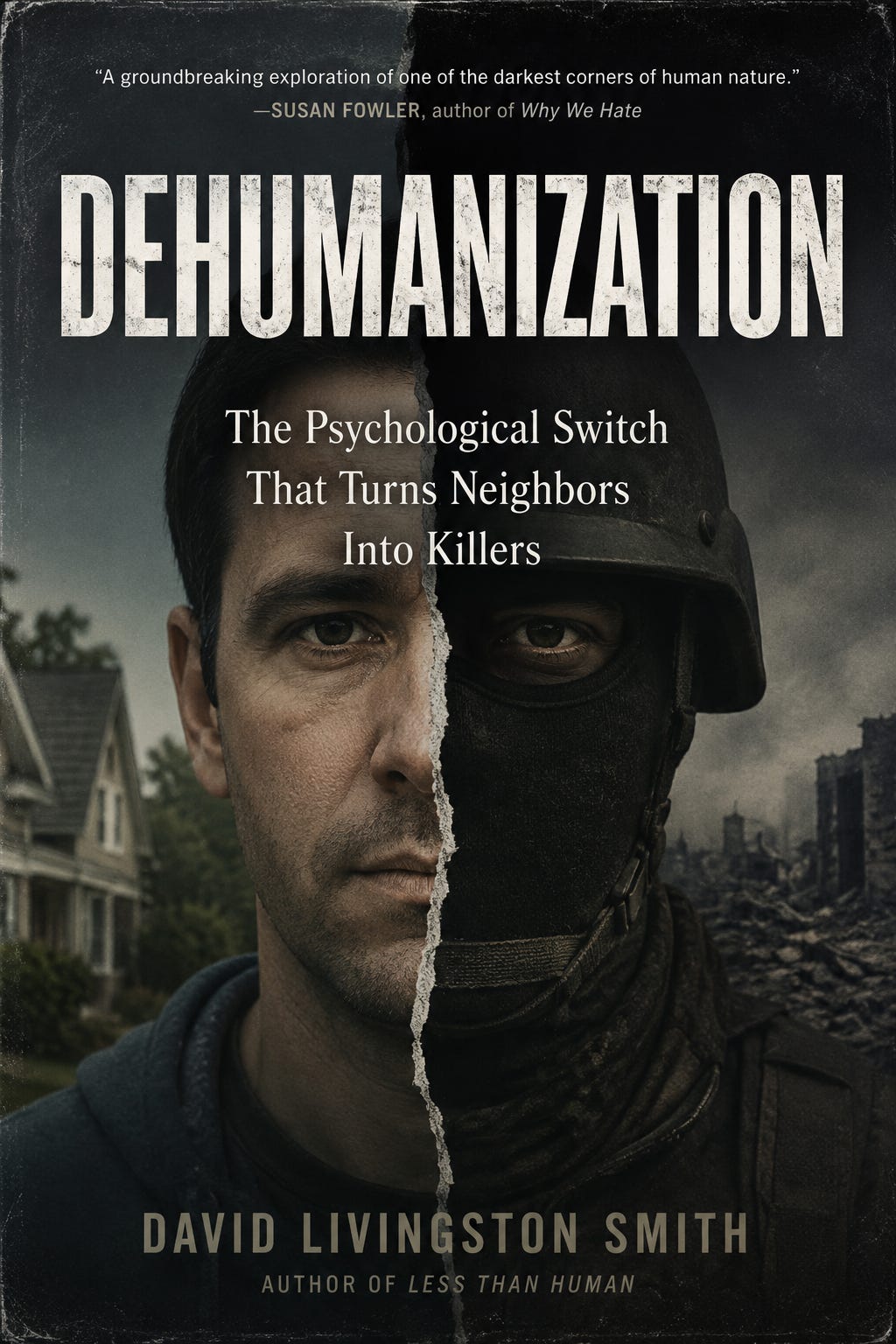
The disturbing psychology behind genocide, mass violence, and humanity’s darkest moments
Every genocide begins with a lie.
Not a lie about politics.
Not a lie about history.
A lie about humanity itself.
Before people are imprisoned, expelled, tortured, or murdered, something else happens first.
They stop being seen as human.
That is the terrifying power of dehumanization, one of the most dangerous psychological processes ever studied.
History often portrays genocide as the work of monsters. But psychology reveals something far more unsettling.
The people who commit mass violence are often not monsters at all.
They are ordinary human beings.
And that should frighten us far more.
"The greatest atrocities in history were not committed by people who thought they were evil, but by people who stopped seeing their victims as people."
Quick Inventory of Depressive Symptomatology
The Most Dangerous Thought a Human Can Have
Imagine meeting someone and genuinely believing they are less human than you.
Not different.
Not mistaken.
Less human.
Less intelligent.
Less civilized.
Less worthy of empathy.
Less deserving of rights.
Once that mental shift occurs, behaviors that would normally seem horrifying suddenly become acceptable.
Psychologists have long argued that dehumanization acts as a psychological permission slip.
It allows people to violate moral rules without experiencing the same guilt, shame, or empathy that would normally stop them.
In simple terms:
It’s easier to hurt people when your brain no longer sees them as people.
How Human Beings Become “The Other”
Humans evolved in tribes.
For most of our history, survival depended on distinguishing between “us” and “them.”
This tendency still exists.
We naturally categorize people into groups.
Political groups.
Religious groups.
Ethnic groups.
National groups.
Sports teams.
Social classes.
Most of the time, these distinctions are harmless.
But under certain conditions, they can become deadly.
When fear, economic instability, political conflict, or social unrest intensify, leaders often search for a target.
A group to blame.
A group to fear.
A group to portray as dangerous.
And once that process begins, psychology takes over.
The Language That Precedes Violence
One of the most chilling patterns in history is that mass violence rarely begins with weapons.
It begins with words.
Before people are attacked, they are often compared to animals, parasites, diseases, insects, vermin, or invaders.
Why?
Because language changes perception.
The moment someone becomes a “rat,” a “cockroach,” a “virus,” or a “plague,” empathy starts to erode.
The human brain responds differently.
Moral barriers weaken.
Cruelty becomes easier to justify.
Violence starts feeling like protection.
This pattern appears repeatedly throughout history.
Different countries.
Different eras.
Different ideologies.
The same psychological mechanism.
Different victims.
The Shocking Truth About Evil
Most people believe they would never participate in atrocities.
Psychologists are not so confident.
Research on obedience, conformity, and group behavior suggests that ordinary individuals can engage in extraordinary cruelty under the right circumstances.
The frightening reality is that most people do not wake up wanting to commit violence.
Instead, they adapt gradually.
A small prejudice becomes normalized.
A stereotype becomes accepted.
A discriminatory policy becomes justified.
A harmful action becomes routine.
Then another.
And another.
The transformation often happens so slowly that people barely notice it.
History’s greatest atrocities were not built overnight.
They were built one rationalization at a time.
Why Empathy Suddenly Disappears
Many people assume empathy is automatic.
It isn’t.
Empathy is selective.
The brain naturally feels stronger compassion for people it identifies as part of its own group.
This creates a dangerous vulnerability.
When individuals are repeatedly portrayed as threats, enemies, or outsiders, empathy can decline dramatically.
Psychologists call this moral exclusion.
The target group is pushed outside the boundaries of moral concern.
Their suffering matters less.
Their rights matter less.
Eventually, their lives matter less.
And once that threshold is crossed, horrifying actions can begin to feel justified.
The Internet Has Supercharged Dehumanization
Social media did not invent dehumanization.
But it accelerated it.
Algorithms reward outrage.
Outrage rewards simplification.
Simplification rewards tribal thinking.
Tribal thinking rewards dehumanization.
Online, people are often reduced to labels.
A political identity.
A religion.
A nationality.
A demographic category.
A hashtag.
The more abstract people become, the easier it is to forget their humanity.
The result is a digital environment where contempt spreads faster than understanding.
And where millions of people encounter each other not as individuals, but as symbols.
The Psychology Nobody Wants to Admit
The hardest truth about dehumanization is not that it exists.
It’s that every human being is vulnerable to it.
Not just extremists.
Not just dictators.
Not just violent groups.
All of us.
The human brain constantly categorizes.
Constantly judges.
Constantly separates.
Most of the time, these tendencies remain harmless.
But under pressure, fear, anger, uncertainty, social influence, they can become dangerous.
The greatest mistake is believing that only other people are susceptible.
History repeatedly shows otherwise.
The Early Warning Signs
Dehumanization rarely arrives announcing itself.
It creeps in quietly.
Watch for these signals:
Entire groups being blamed for complex problems.
People being described as animals, diseases, or infestations.
Claims that some humans are inherently inferior.
Narratives portraying certain groups as existential threats.
Calls to remove rights from targeted populations.
Language that treats people as objects rather than individuals.
These are not merely political signals.
They are psychological warning signs.
And history suggests they should never be ignored.
The Antidote
If dehumanization begins by denying humanity, the solution begins by restoring it.
Research consistently shows that meaningful contact between groups reduces prejudice.
Stories increase empathy.
Personal relationships weaken stereotypes.
Direct human connection challenges fear.
It is difficult to hate someone once you genuinely know them.
Difficult to reduce them to a label.
Difficult to see them as less than human.
That doesn’t eliminate conflict.
But it makes cruelty harder.
And sometimes, that difference matters more than we realize.
If this piece gave you something valuable, consider supporting the work.
Your support helps keep Human Psychology independent, deeply researched.
This article hit home when it comes to mass shootings that have become all too common in our society. Educators….Parents…..In understanding these behaviors as potential warning signs before an act is committed.
Dehumanization has eaten deep into the society , this article really opened my eyes to the basis of most systems like hierarchy race , patriarchy and the rest