

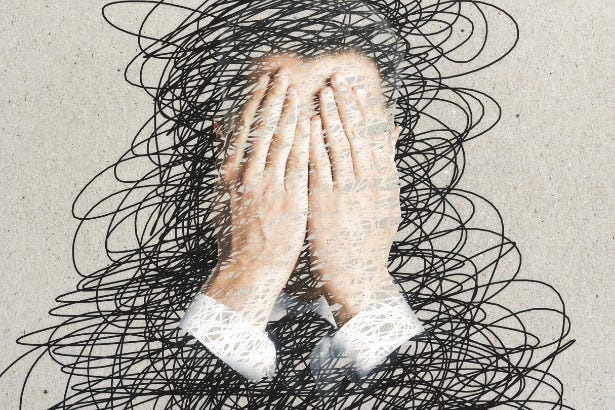
“The deepest loneliness is not when no one understands you. It’s when you stop understanding yourself.”
There’s a kind of pain nobody talks about.
Not heartbreak.
Not rejection.
Not grief.
Something quieter.
The pain of waking up one day and realizing you have become a stranger to yourself.
Not because life happened.
But because somewhere along the way, in loving people, pleasing people, fixing people, carrying people, you left yourself behind.
This is the psychology of self-abandonment.
And it rarely feels like abandonment at first.
At first, it feels like love.
What Self-Abandonment Actually Looks Like
Self-abandonment is not dramatic.
It doesn’t arrive like a storm.
It arrives in small betrayals.
Saying “yes” when your body is screaming “no.”
Staying silent when something hurts you.
Making yourself easier to love.
Shrinking your needs.
Ignoring your intuition.
Laughing when you feel disrespected.
Explaining away behavior that breaks your heart.
And over time, these moments pile up.
Until one day you realize:
You’ve been showing up for everyone except yourself.
Psychologically, self-abandonment happens when survival becomes more important than authenticity.
And for many people, that began in childhood.
It Usually Starts Earlier Than You Think
No one is born abandoning themselves.
It is learned.
A child who grows up in unpredictable emotional environments quickly understands something dangerous:
Love must be earned.
Maybe you were only praised when you behaved.
Maybe emotions were inconvenient in your home.
Maybe expressing anger made people withdraw.
Maybe your needs were too “much.”
So your nervous system adapted.
You became agreeable. Hyper-aware. Useful.
You learned:
“If I keep everyone okay, I’ll be okay.”
That pattern follows people into adulthood.
Not because it’s healthy.
Because it’s familiar.
And the brain often confuses familiar with safe.
Why We Choose Others Over Ourselves
This isn’t weakness.
It’s psychology.
At the root of self-abandonment is often:
1. Fear of rejection
If I disappoint them, will they leave?
2. Fear of conflict
If I speak honestly, will everything fall apart?
3. Fear of being selfish
What if my needs make me unlovable?
4. Trauma conditioning
If love once required self-sacrifice, your mind keeps repeating it.
The tragic part?
People who self-abandon are often praised for it.
They’re called:
“Kind.”
“Patient.”
“Understanding.”
“Selfless.”
But many times, what looks like kindness is actually self-erasure.
And that distinction changes everything.
The Invisible Cost of Always Being the Strong One
People think self-abandonment only affects relationships.
It affects identity.
When you constantly shape yourself around others, you lose access to your own internal world.
What do you want?
What hurts you?
What matters to you?
Many people cannot answer these questions.
Because they’ve spent years becoming what everyone else needed.
And eventually, the body starts speaking.
Anxiety.
Resentment.
Exhaustion.
Emotional numbness.
Because suppressed truth always leaks somewhere.
The body keeps score of every time you betray yourself.
Why It Feels So Hard to Stop
Here’s the part nobody tells you:
Self-abandonment becomes addictive.
Not because it feels good.
Because it feels predictable.
Being needed can feel safer than being known.
Being useful can feel safer than being vulnerable.
Being chosen can feel safer than choosing yourself.
So even when it hurts, you stay.
You overgive.
Overexplain.
Overextend.
Not because you want to.
Because your nervous system still believes love requires it.
Healing begins when you question that belief.
The Moment You Start Coming Back to Yourself
Recovery from self-abandonment is not becoming selfish.
It’s becoming honest.
It sounds like:
“I don’t like that.”
“That hurt me.”
“I need space.”
“No.”
Simple words.
But for someone who has spent years betraying themselves, those words feel revolutionary.
Terrifying, even.
Because every boundary feels like risking love.
But here’s the truth:
The people who only love the version of you that self-abandons were never loving the real you.
They were loving your compliance.
And there is a difference.
A painful one.
But an important one.
Coming Home to Yourself
Healing is not dramatic.
It’s subtle.
It’s noticing when your body tightens.
Listening when your intuition whispers.
Trusting your anger.
Honoring your sadness.
Letting your “no” matter.
Choosing yourself in tiny ways.
Again.
And again.
And again.
Until your inner world no longer feels like unfamiliar territory.
Until you no longer disappear inside relationships.
Until love stops costing you yourself.
That’s what coming home feels like.
Not becoming someone new.
But returning to the person you were before survival taught you to leave.
“Self-abandonment is giving away pieces of yourself in exchange for belonging. Healing is realizing you were always worthy without the trade.”
And maybe the most important relationship you will ever repair…
is the one with yourself.
Writing like this takes time, thought, and heart.
If this piece meant something to you, buying me a coffee is a small way to keep this space alive.
This is a POWERFUL POST WELL WRITTEN POST!! I found myself doing some very strong self examination! When I did i found myself crying long and hard. I am exactly who you were describing! WOW!
This is all great and something I have struggled with forever and yet I don’t know how to stop. As you said it’s familiar.